Why Has Russian Foreign Policy Shifted from Pragmatism to Opportunism?
From Russia's Return as a Great Power to Its Post-Ukraine-War Diplomatic Transformation
When Vladimir Putin first came to power more than two decades ago, Russia actively sought cooperation with the West.
Following the 9/11 attacks, Putin offered support to the United States in the fight against terrorism and even explored
closer ties with Europe. How, then, did Russia move from pragmatic engagement to open confrontation with the West?
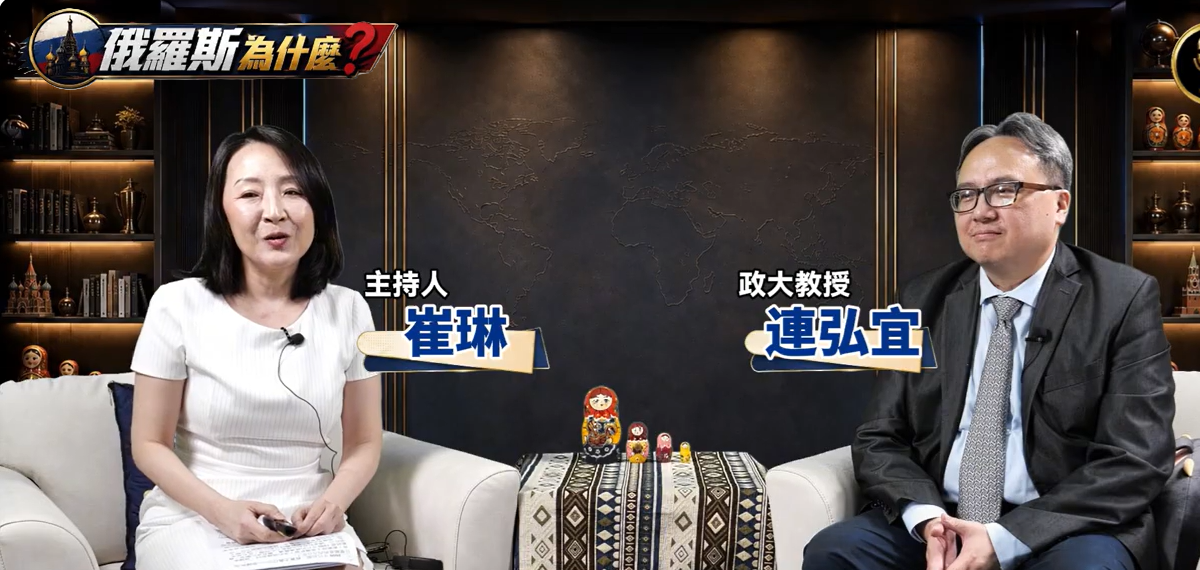
In this episode of (Why Russia?), host Lin Tsui is joined by Professor Lien Hong-Yi, Prof. of Diplomacy at
National Chengchi University and former Dean of the College of International Affairs.
Together, they trace the transformation of Russian foreign policy under Putin, from a pragmatic approach shaped
by domestic economic priorities, through the rise of nationalism and renewed great-power ambitions, to the more
flexible and opportunistic diplomacy that has emerged since the outbreak of the Russia-Ukraine war.
In this episode:
▸ How did the colour revolutions and NATO enlargement shape Russia's perception of the West?
▸ Why did Russia's economic and political recovery lead to a shift in its foreign policy?
▸ From Crimea to the Russia-Ukraine war, what has Russia sought to achieve?
▸ What does Putin mean by restoring Russia'status as a “great power”?
▸ Has Russia's foreign-policy shift been driven primarily by Western pressure-or by the country's growing confidence in its own strength?
▸ And if the Putin era eventually comes to an end, could Russian foreign policy return to a more pragmatic approach?
From history to today. From Russia to the wider world.
Understanding the evolution of Russian foreign policy offers important insights into the changing dynamics of
global geopolitics and the possible directions of the international order ahead.
Watch the full episode: https://www.youtube.com/watch?v=gPbjuXPLlj8